

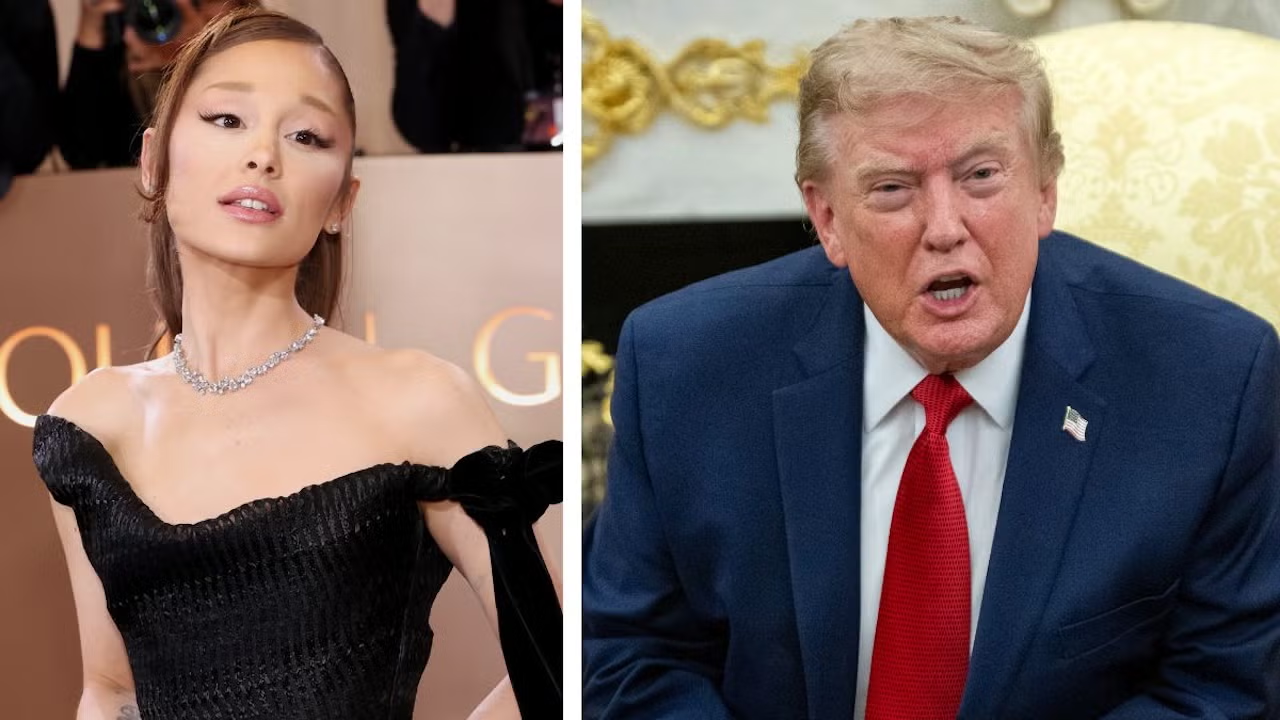
Ariana Grande is once again at odds with the Trump administration — and this time, it’s not just about policy. It’s personal, and it’s playing out in a comment section.
The TikTok That Started It
On Thursday, August 20, 2026, the official Team Trump TikTok account posted a video of President Trump walking toward a podium at a speaking event. Layered over the clip was text pulled straight from Grande’s 2024 hit “We Can’t Be Friends (Wait for Your Love)”: the lyric “Me and my truth we sit in silence,” followed by a statement about transgender athletes in women’s sports.
The caption doubled down, tagging Grande by name alongside hashtags for Trump and MAGA, and framing the message as something that “shouldn’t be controversial.”
Grande didn’t wait long to respond. She went straight to the comment section of the post itself and made her position clear: she wanted her music nowhere near it, and she rejected the message the video was built around.
Not the First Time
This wasn’t an isolated flashpoint. Two months earlier, in June 2026, the White House’s own TikTok account had used another track from Grande’s Eternal Sunshine album — “Bye” — as the soundtrack for a video showing ICE agents arresting and handcuffing people amid the administration’s immigration enforcement push. Grande objected forcefully at the time, condemning the association between her music and the enforcement actions shown in the clip. Her team subsequently worked to get the audio pulled from that post.
The pattern has continued beyond TikTok. Grande also resurfaced criticism of the administration on Instagram, resharing a post from activist Matt Bernstein that took aim at the administration’s record on immigration enforcement, transgender rights, and free speech — prompting a public response from the White House.
Part of a Bigger Pattern
Grande is far from alone. Musicians pushing back against the Trump team’s use of their work has become something of a recurring theme this year. Taylor Swift and Bad Bunny have both reportedly had tracks pulled from official posts after objecting, while other artists have taken more pointed public stances of their own. The friction points to a broader tension: administrations and campaigns regularly use popular music to make social content feel current and relatable, but artists increasingly want control over how — and whether — their work gets tied to political messaging they didn’t sign off on.
For Grande specifically, the timing adds another layer. She’s currently touring in support of her Eternal Sunshine era and has been vocal off-stage as well as on, including wearing pins in support of causes she’s publicly backed at award shows earlier this year.
Why It Matters
Beyond the celebrity back-and-forth, the episode touches on a few threads worth watching:
- Artist control over intellectual property in political content. Even when a campaign or administration doesn’t need a music license for a short social clip under certain platform agreements, public backlash from an artist can still force a post to be edited or pulled.
- Celebrity political engagement. Grande joins a growing list of high-profile musicians willing to publicly break with an administration over how their art and image are used.
- The made-for-social nature of modern political messaging. Using a chart-topping love song’s lyrics to make a policy point about sports illustrates how deliberately political content is now built to blend into entertainment feeds.
What’s Next
As of this writing, the TikTok post remains live with Grande’s song still attached, unlike the earlier “Bye” post, which was reportedly muted after her objection. Whether Team Trump follows the same path this time remains to be seen.
What is clear is that the dispute has once again put Grande’s name — and her music — at the center of a national conversation she didn’t ask to join, and it’s unlikely to be the last time a pop star’s back catalog becomes unexpected political flashpoint.
This article is based on public statements, social media posts, and news reporting as of late August 2026.

